
Transitioning from Android to Spruce
Android development typically involves Java or Kotlin, while Spruce is a TypeScript-based platform.
While Android focuses on front-end and does support directly implementing some backend type functionality, most times an Android app is communicating with a remote API to do it’s work. Spruce, on the other hand, is a “full-stack platform” that allows for both beautiful UI’s and robust back-ends.
This guide will help you connect your knowledge of Android development to Spruce’s architecture, showing you how to adapt your existing skills to the Spruce environment.
Key Differences between Android and Spruce Development
| Android | Spruce | |
|---|---|---|
| Programming Language | Java/Kotlin | TypeScript |
| IDE | Android Studio | Visual Studio Code |
| App Lifecycle | Application, Activities, Fragments | SkillViewController lifecycle (optional AppViewController) |
| UI Design | XML Layouts, Jetpack Compose | Heartwood, ViewControllers |
| Event Handling | Intents, BroadcastReceivers, LiveData | Mercury |
| Data Persistence | Room, SharedPreferences, SQLite | Data Stores |
| Error Handling | Try-Catch Blocks, Exceptions | Try-Catch Blocks, SpruceErrors |
| Testing | JUnit, Espresso | TDD by the 3 laws |
| User Authentication | Firebase Auth, Custom Solutions | Mercury, Authenticator |
| User Permissions | Runtime Permissions, Custom Logic | Mercury, Authorizer |
Programming Language
Android
In Android, you can use Kotlin with Jetpack Compose to build declarative UIs. Activities and Fragments manage the lifecycle and UI.
import android.os.Bundle
import androidx.activity.ComponentActivity
import androidx.activity.compose.setContent
import androidx.compose.material3.*
import androidx.compose.runtime.Composable

class MainActivity : ComponentActivity() {
    override fun onCreate(savedInstanceState: Bundle?) {
        super.onCreate(savedInstanceState)
        setContent {
            MyApp()
        }
    }
}

@Composable
fun MyApp() {
    Column {
        Text("Knock, knock!")
        Text("Who's there?")
    }
}
Spruce
Spruce is built entirely in TypeScript. This SkillViewController will render a full screen view with a CardViewController on it with a title and a subtitle. All ViewControllers (and SkillViewControllers) reduce down to a ViewModel that return from render(). In Spruce, 100% of the styling is handled by Heartwood (Storybook).
import {
  AbstractSkillViewController,
  CardViewController,
  ViewControllerOptions,
  buildSkillViewLayout,
  SkillView
} from '@sprucelabs/heartwood-view-controllers'

export default class RootSkillViewController extends AbstractSkillViewController {
  public static id = 'root'
  protected cardVc: CardViewController

  public constructor(options: ViewControllerOptions) {
    super(options)

    this.cardVc = this.Controller('card', {
      header: {
        title: 'Hello, World!',
        subtitle: 'This is a card'
      }
    })
  }

  public render(): SkillView {
    return buildSkillViewLayout('grid', {
      cards: [this.cardVc.render()]
    })
  }
}
IDE
Android in Android Studio
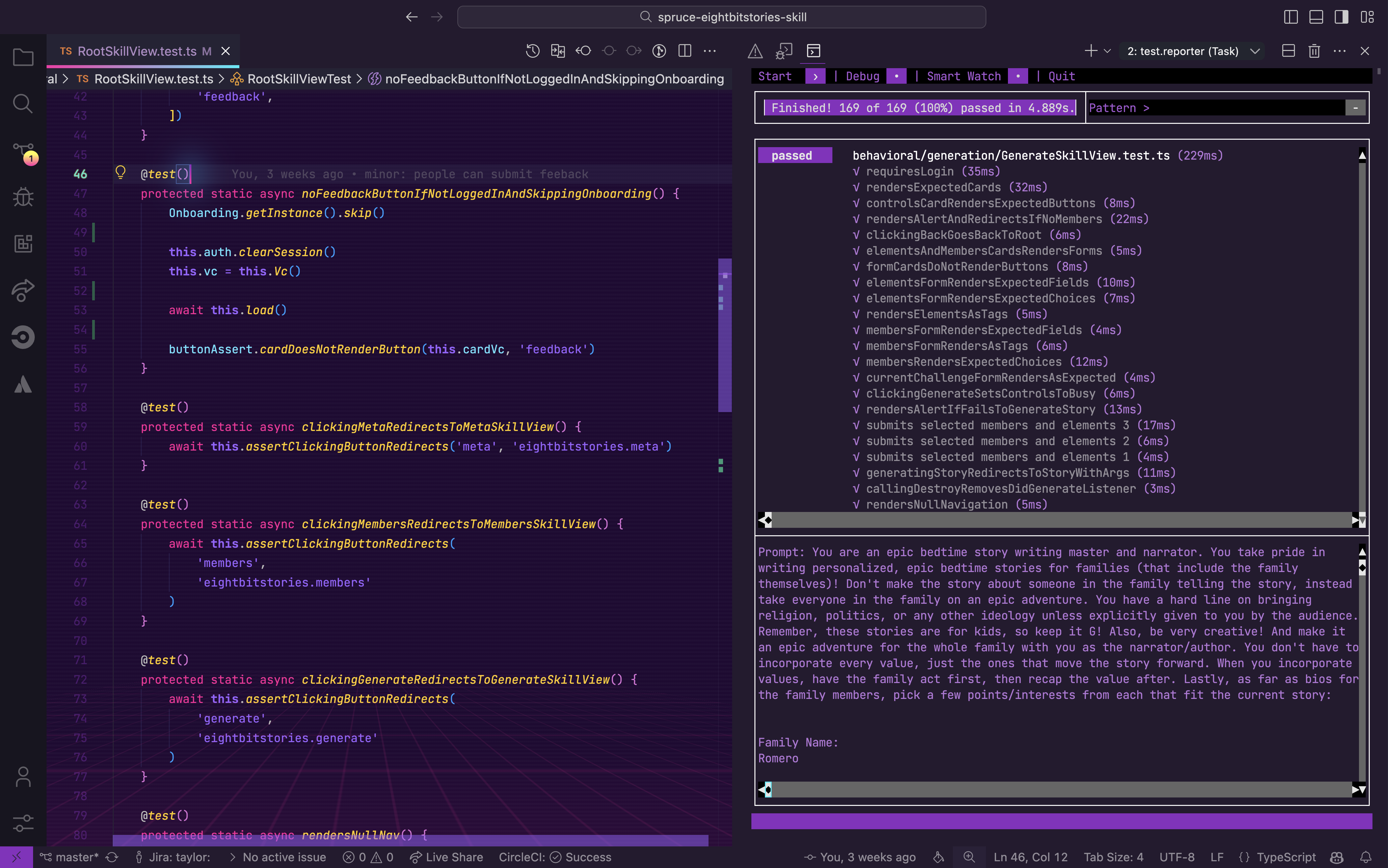
Spruce in Visual Studio Code
Spruce has been fully integrated into Visual Studio Code with custom extensions, launch configs, and settings.
App Lifecycle
Android
Android apps have a complex lifecycle managed through Activities and Fragments. Each has lifecycle methods like onCreate(), onStart(), onResume(), onPause(), onStop(), and onDestroy().
class MainActivity : AppCompatActivity() {
    override fun onCreate(savedInstanceState: Bundle?) {
        super.onCreate(savedInstanceState)
        // Initialize UI
    }

    override fun onResume() {
        super.onResume()
        // App is visible and active
    }

    override fun onPause() {
        super.onPause()
        // App is partially visible
    }
}
Spruce
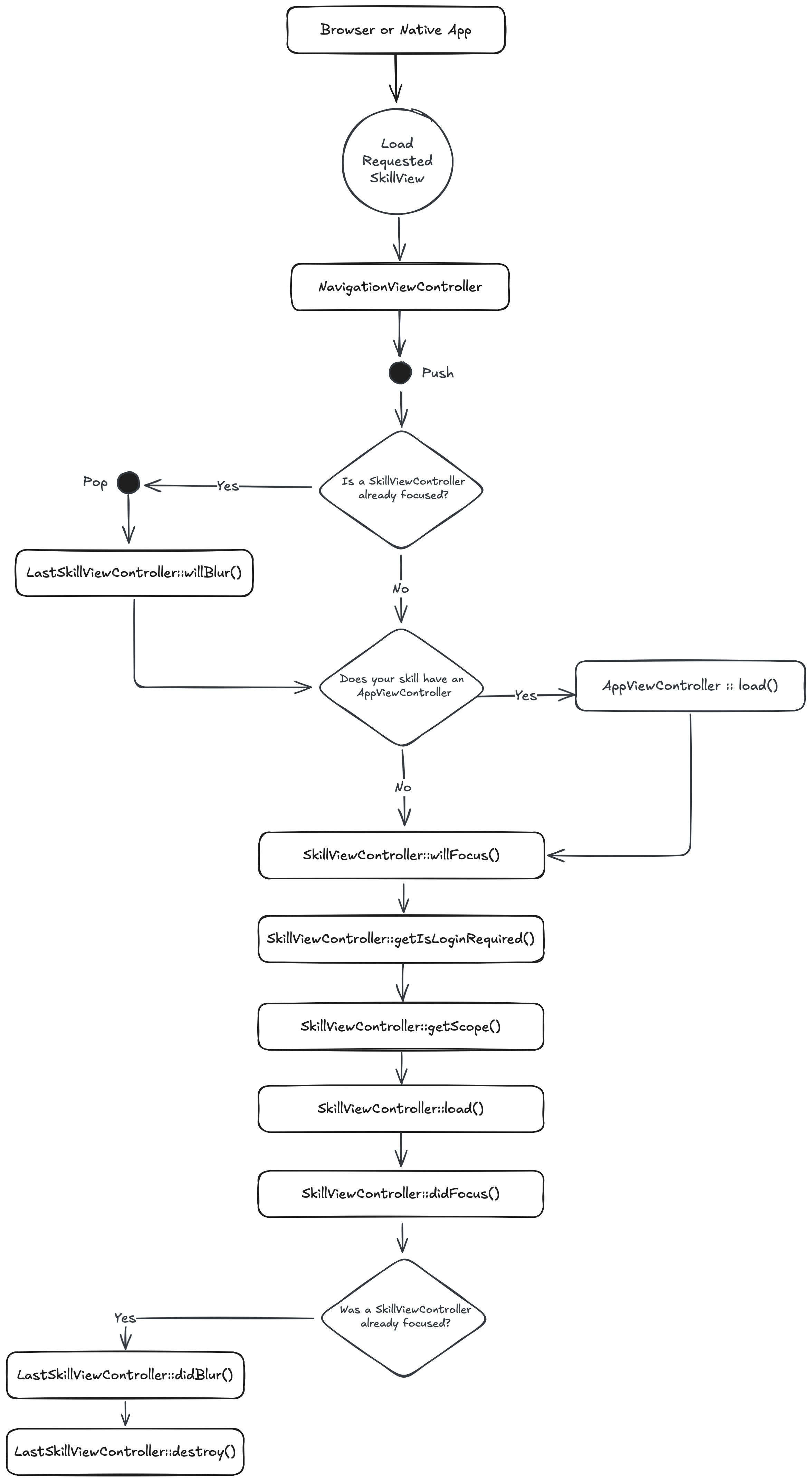
When a browser or native app loads your Skill, it will start by hitting its RootSkillViewController. If your Skill has an AppViewController declared, it will be loaded first. You can execute code at each stage by implementing a method by the name of the stage.
UI Design
Android
You can build UIs using XML layouts or Jetpack Compose. Compose is the modern declarative approach.
@Composable
fun Greeting(name: String) {
    Card(
        modifier = Modifier.padding(16.dp)
    ) {
        Column(modifier = Modifier.padding(16.dp)) {
            Text(text = "Hello, $name!", style = MaterialTheme.typography.headlineMedium)
            Text(text = "Welcome to the app")
        }
    }
}
Spruce
Heartwood handles the rendering of all front end components. It adopts the philosphy of “Everything Beautiful”. While you are constrained to the views that Heartwood provides, you can customize their look by running the following in your skill:
spruce create.theme
This will create a skill.theme.ts file you can customize. If you want to apply a theme to your organization (vs just your skill), you can utilize the Theme Skill.
Event Handling
Android
Android uses Intents for inter-component communication, BroadcastReceivers for system-wide events, and LiveData/Flow for reactive data updates.
// Sending a broadcast
val intent = Intent("com.example.CUSTOM_EVENT")
intent.putExtra("message", "Hello from broadcast!")
sendBroadcast(intent)

// Receiving a broadcast
class MyReceiver : BroadcastReceiver() {
    override fun onReceive(context: Context, intent: Intent) {
        val message = intent.getStringExtra("message")
        Log.d("Receiver", message ?: "No message")
    }
}
Spruce
In Spruce, your views are rendered on the edge, while your Skill is hosted on a server. So, you have to use the Mercury event system to communicate between the two. Mercury also allows you to pass information other skills.
// inside of Skill View sending message to the Skill with the namespace "eightbitstories"

const client = await this.connectToApi()
await this.client.emitAndFlattenResponses(
  'eightbitstories.submit-feedback::v2023_09_05',
  {
    payload: {
      feedback: 'Help make this better!',
    },
  }
)
Data Persistence
Android
Android offers several options: SharedPreferences for simple key-value storage, Room for SQLite with type safety, or direct SQLite access.
// SharedPreferences
val prefs = getSharedPreferences("MyPrefs", Context.MODE_PRIVATE)
prefs.edit().putInt("age", 25).apply()

// Room Database
@Entity
data class Car(
    @PrimaryKey val id: Int,
    val make: String,
    val model: String,
    val year: Int
)

@Dao
interface CarDao {
    @Insert
    suspend fun insert(car: Car)

    @Query("SELECT * FROM car")
    suspend fun getAll(): List<Car>
}
Spruce
In Spruce, you’ll use the Stores feature to persist data. The stores use Schemas to define the shape of the data.
spruce create.store
Once you configure your store, you can use it in your skill’s event listener like this:
export default async (
  event: SpruceEvent<SkillEventContract, EmitPayload>
): SpruceEventResponse<ResponsePayload> => {
  const { stores } = event

  const cars = await stores.getStore('cars')
  await cars.createOne({
    make: 'Toyota',
    model: 'Camry',
    year: 2022
  })

  return {
    success: true,
  }
}
Error Handling
Android
Android uses standard Java/Kotlin exception handling with try-catch blocks.
try {
    riskyOperation()
} catch (e: IOException) {
    Log.e("Error", "IO error occurred", e)
} catch (e: Exception) {
    Log.e("Error", "An error occurred", e)
}
Spruce
Spruce provides a much more robust, standardized error handling system. You can use the SpruceError class to create custom errors, you define the Schemas for those errors to give them shape, and then use try-catch blocks to handle them.
spruce create.error
This will create an error builder inside of your skill at ./src/errors/{{errorName}}.builder.ts. Inside there is the schema that defines your error.
You can throw an error you have defined like this:
throw new SpruceError({
  code: 'MY_ERRORS_NAME_HERE',
  friendlyMessage: 'All errors can provide a friendly error message!',
})
Testing
Android
Android uses JUnit for unit tests and Espresso for UI testing.
class ExampleUnitTest {
    @Test
    fun addition_isCorrect() {
        val result = 2 + 2
        assertEquals(4, result)
    }
}

// Espresso UI test
@Test
fun buttonClick_showsText() {
    onView(withId(R.id.button)).perform(click())
    onView(withId(R.id.textView)).check(matches(withText("Clicked!")))
}
Spruce
Everything in Spruce starts with a Test. If you want to write a piece of production code, you must start with a failing test.
spruce create.test
Once your test file is created, you are ready to start!
User Authentication
Android
Android doesn’t have built-in authentication. You typically use Firebase Auth, OAuth libraries, or custom server-side solutions.
// Firebase Auth example
FirebaseAuth.getInstance().signInWithEmailAndPassword(email, password)
    .addOnCompleteListener { task ->
        if (task.isSuccessful) {
            val user = FirebaseAuth.getInstance().currentUser
        } else {
            Log.e("Auth", "Sign in failed", task.exception)
        }
    }
Spruce
Because Mercury handles user authentication (and authorization). You can use the Authenticator to know if a person is logged in or not. You can also use it to log a person in or out.
//inside your Skill View's load lifecycle method
public async load(options: SkillViewControllerLoadOptions) {
  const { authenticator } = options

  this.log.info(authenticator.isLoggedIn())
  this.log.info(authenticator.getPerson())

  // force person to be logged out
  authenticator.clearSession()

}
User Permissions
Android
Android has a runtime permission system for accessing device features like camera, location, and storage.
// Request permission
if (ContextCompat.checkSelfPermission(this, Manifest.permission.CAMERA)
    != PackageManager.PERMISSION_GRANTED) {
    ActivityCompat.requestPermissions(this,
        arrayOf(Manifest.permission.CAMERA),
        CAMERA_PERMISSION_REQUEST)
}

// Handle result
override fun onRequestPermissionsResult(
    requestCode: Int,
    permissions: Array<String>,
    grantResults: IntArray
) {
    if (requestCode == CAMERA_PERMISSION_REQUEST) {
        if (grantResults.isNotEmpty() && grantResults[0] == PackageManager.PERMISSION_GRANTED) {
            // Permission granted
        }
    }
}
Spruce
Mercury also handles all your Permission needs. To introduce new permissions into the platform, you need to create a Permission Contract in your skill:
spruce create.permissions
Then you can do permission checks in your Skill View like this:
//inside your Skill View's load lifecycle method
public async load(options: SkillViewControllerLoadOptions) {
  const { authorizer } = options

  const permissions = await authorizer.can({
    contractId: 'eightbitstories.eight-bit-stories',
    permissionIds: ['can-generate-story'],
  })

  const canGenerateStory = permissions['can-generate-story']

}
